Monday, July 28, 2014

Pursuing Happiness


Each person has a set point for happiness. It is impacted by genetics, family and life experiences. Your happiness level is also greatly influenced by daily thoughts and behaviors, perhaps even more profoundly than any other influence. What you think about, and what you choose to do each day makes a big difference in both your own life and every life you touch.

Positive psychology is a field of inquiry that began to be identified in 1998 by University of Pennsylvania psychology professor, writer and researcher Martin Seligman. He's the author of Authentic Happiness and Learned Optimism. It is based on the idea that psychology shouldn't just focus on mental illness and pathology, but also lead in the pursuit and understanding of what helps people create meaning, contentment, joy, resiliency and wellness.

Shawn Achor, M.A. is a Harvard scholar, educator, business consultant and writer who has spent over 12 years studying what makes people happy. His TED talk about happiness is one of their 20 most viewed lessons. He is a big advocate of positive psychology, and wrote The Happiness Advantage. Achor is interested in how happiness improves work success.

It's not like people who are happy don't feel unhappiness. They do, and it's important. Sometimes unhappiness is a key indicator that you need to change something in your life. You may need to assert yourself more, change jobs, or upgrade or end a relationship that's not working well. The opposite of happiness is actually apathy, when one doesn't care and doesn't believe what you do matters. Positive psychology strives to help people see that what they think, feel, and do does matter a great deal.

Here are some positive psychology strategies for feeling happier:

1. Each day, identify 3 different things you are grateful for. It helps build appreciation.

2. Send a thank you email, note, or give an in person thank you every day. It helps build connection.

3. Reflect each day, and either visualize or write down a little about one meaningful experience you have had recently. Rerun the experience through your mind as if it was happening now.

4. Still your mind for 20 minutes a day. Sit quietly. No distractions. Usher thoughts out as they pop up.

5. Move every day for at least 30 minutes.

6. Notice emotional pain and address it; don't numb it with alcohol, substances or addictive behavior.

7. Reach out to others. Say 'hi" and smile to others you meet throughout the day. Break the self-absorption cycle that many people are caught in.

8. Help someone else, whether officially through volunteering or informally when you are aware of other people's needs and do what you can to lift others up.

Your thoughts, feelings and behaviors matter. Connecting with others and staying focused on your own true north helps. Think of these happiness habits as happiness hygiene. Just like you shower and brush your teeth daily, these behaviors are most effective in lifting your mood if you do them every day. Let's be intentional about doing the things that make us happier and more aware of our impact on each other.


Monday, July 21, 2014

Are There Late Night Creatures at Your House?

Parents of teenagers beware. Most teens are not getting enough sleep. The recommended number of hours per night for teens is nine. A recent poll by the National Sleep Foundation found that over 50% of teens ages 15 to 17 only get seven hours a night. That's two hours short for many teens, which makes them overly tired and moodier. Being a teen is already hard, and full of stress and changes. Being exhausted doesn't help. Are you a savvy parent who knows why?

Most teens are heavily scheduled during hours when their parents are up, with school, activities, lessons, sports and homework. When we go to bed, guess who stays up late to have some downtime and freedom? Yes, that would be our teenagers.

The drawing power of connection through social media is luring teens in to quietly snap-chatting, texting, instagramming, tweeting, face-timing, youtube surfing, downloading music and more in the dark of their bedrooms after parents think they are asleep. It's a trend the New York Times covered in a story on July 6 about the trend to "vampire" or "vamp" by being up late in the night. Some teens find it cool to see posts timed in the middle of the night, as it can represent freedom.

Parents need to communicate with teens about the need for sleep, and setting some reasonable limits to protect their sleep habits. Does your teen have a time when their smart phone, laptop, ipad, etc. is turned off and plugged in for recharging somewhere they can't get to it again before morning? As a family counselor, I am more concerned about this for younger teens than older ones. If your teen has disappointing or declining grades, this possibility is something it's smart to consider and do some surprise check-ins that all is dark and quiet in their room.

Danah Boyd, a writer/researcher with Microsoft Research recently published her book, "It's Complicated: The Social Lives of Networked Teens". She considers social media sort of the new mall for this generation of teens to hang out together and have social contact. Many teens are so structured by day that late nights are the only downtime.

What's a parent to do? Stay in conversation with your teen about these issues of sleep, downtime, the need for social contact and the importance of setting some limits and boundaries. We also need to watch what we role model, and put our own technology to bed at a reasonable hour, have good sleep patterns and lifestyle habits.

Watch out for the vampires at your house. Check your teen's bedrooms first for the faint glow of a smartphone under the covers.

Monday, July 14, 2014

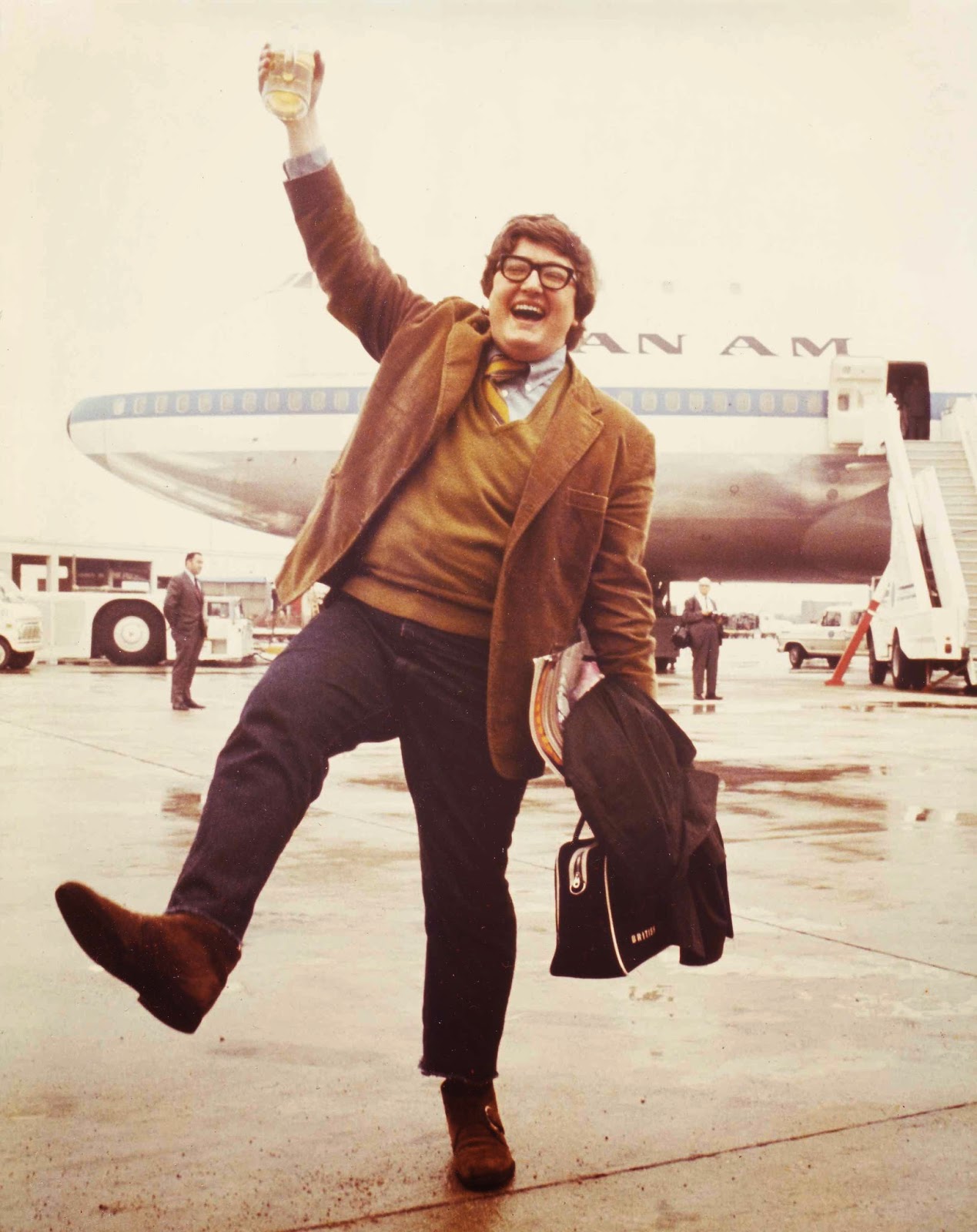
Life Itself: The Life of Roger Ebert


Pulitzer Prize winning film critic Roger Ebert died last year at age 70, but just last week filmmaker Steve James released his new documentary about Ebert's life called Life Itself. The film was executive produced by Martin Scorsese, who is interviewed in the documentary, as well as Chaz Ebert, Marlene Iglitzen Siskel and other friends, producers, writers and directors. It's a meaningful but poignant film, based on the book of the same title. It's well worth seeing and discussing.

In Life Itself, Ebert notes that what he loves about film is it's ability to help us all learn empathy for other people: people in other places and circumstances than ourselves.

Ebert fought for years with his frenemy, Chicago Tribune film critic Gene Siskel. Together they hosted the movie review television shows Sneak Previews and Siskel and Ebert at the Movies. Their egos clashed. They were quite different, they fought for screen time and often bickered endlessly as they taped their shows. Siskel died after surgery from brain cancer in 1999 at age 53, and never told Ebert he was terminally ill or said goodbye.

Ebert's biggest battle was against thyroid and jaw cancer, which required multiple surgeries and left him unable to speak, eat or drink. It was a long journey, and his wife Chaz who he married at age 50 was with him every step of the way. Her family embraced him, despite their differences. (She's black, he was white). They met at AA. They loved each other dearly and she was his advocate and caregiver throughout his illness.

After Ebert won the Pulitzer at the Chicago Sun Times, he received offers to move to newspapers in Washington D.C., Los Angeles and New York. He turned them all down to stay in his hometown. The movie is a kind of love story to Chicago, with some beautiful photography of the city, and snippets about what he loved about his city.

Partially due to what he experienced with the secrecy Gene Siskel's death, Ebert decided to be open and disclose his stuggle with cancer. He still appeared in public even after his disfiguring facial surgery. He was brave and open with his journey. In the movie, he even allowed the director to film him being suctioned by nurses. When they started the movie, Ebert and the director didn't realize that Ebert was in the last few months of his life.

One of the most profound lessons from Ebert's life was the way he adapted to the changes that came with his cancer. He intended to return to television, but when it became impossible he embraced blogging on his website, and blogged until the day before he died. He loved to write. Continuing to write and review films helped keep him alive longer. He realized communicating with the public was still possible. His last blog entry was called, "A Leave of Presence". He was grateful for a great and interesting life.

Director Steve James does a fine, insightful portrait of Ebert, often developed through email exchanges between the film critic and the director about his life, his parents, his career, his foibles. and his personal life. There are a number of important lessons in his life about courage, getting past ego, openness in the face of life threatening illness, adapting to health changes, finding true love late in life, and being loyal to your hometown.

Thumbs up for the brave Roger Ebert, and the film Life Itself. Sometimes it's the things that we don't expect in life, and how we choose to respond to them, that define us.


Monday, July 7, 2014

The Importance of Play

Over the last 50 years, children have lost a great deal of their free time for self-directed play and free time. Psychology researcher Peter Gray from Boston College has studied this cultural shift in the U.S., and is an advocate for the benefits of play. Gray has written, "Free to Learn: Why Unleashing the Instinct to Play Will Make Children Happier, More Self-Reliant, and Better Students for Life".

I can remember spending many summers swimming, playing with my neighborhood friends, and riding my bike until dark. Those are some of my fondest memories. In the 1960's, most American neighborhoods were full of children outside, engaged happily playing. Over the last 50 years, fewer children are outside, and more parents have children involved in structured after school activities, sports, and lessons.

The school day and school year is longer. Homework is more intense, even in the very early grades. There is pressure on children and teens to build their resumes, rather than "waste" time with friends.

Many parents are fearful about having children play in the neighborhood. Safety concerns have trumped the need for free play. Most American children have lost the chance to play at something creative that doesn't involve adults or uniforms.

Play, according to Gray's research, is a biological and evolutionary need. Most animals play as babies. They learn about the world this way, as well as develop muscle strength and agility, social skills, and risk taking ability.

Virtually all cultures have their young learn and develop through play.

Gray has identified higher levels of anxiety and depression in children who don't get enough free play. I have a number of children I've seen for child counseling who long for more unstructured free time. Children and teens can get stressed. They need to relax with play frequently for optimum mental health.

Parents need to not over plan and over schedule. While some structure is good for children, such as bedtime and meal times, too much structure is overkill. Remember that for most children, the amount of time they have during the school day to free play--- recesses and lunch--- have been cut way back from what we experienced growing up.

Adults also need to play. Having a hobby that you can lose yourself in is good for us. There is a natural, hypnotic state that our mind goes to when we are playing with gardening, art, hiking, baking, or any other activity we love.

I like to see couples cultivate joint play activities into their relationship also. It's important for couples and families to play together. With couples, playing together elevated the relationship from all business and task-sharing, and helps you associate your partner with play and joy.

When I am counseling families who are healing from loss or trauma, I often want them to begin to play again. This signals to the children that life is not over, and that there will be happier times ahead, despite the death of a family member or the loss of divorce.

Play needs to be taken more seriously. Summer is a perfect time to start building some free time for play in your life, and seeing that the young people in your life get time to create self-directed play as well. Play helps us be happier, more relaxed, self-directed, and less moody. Let's play!

Monday, June 30, 2014

What is Your Health Legacy?


I spent a weekend in June learning from Daniel Amen, MD, Daniel Siegel, MD, Mark Hyman, MD,  Tana Amen, RN and a variety of other mental health, physical health, wellness and fitness experts at "Brain and Body Turnaround". The conference got me thinking about how much we each need to take responsibility for our health, and the patterns we are modeling for our children and grandchildren.

Dr. Amen is a neurologist and psychiatrist who founded the Amen Clinics, where he is well-known for using brain scans to help identify certain kinds of physical and mental illness, and his studies show the impact of improved health habits on brain functioning. Dr. Siegel is a UCLA child psychiatrist and leading expert and researcher in mindfulness.

We each inherit certain genetic predispositions, but we can take control for doing our best to manage our moods and not trigger health problems. We all have choices about our thinking, the food we eat, having good sleep habits, and whether or not we exercise. I enjoyed the conference because it focused on getting past excuses and making some small changes. Even a few changes, like adding in a daily walk, can have a huge impact on your physical and mental wellness.

Each of us has to decide what health legacy we want to leave behind us. Our life is our message. It is more powerful than whatever you could say to your children.

Do you want younger family members to see you actively engaged in learning new things, practicing mindfulness, forgiving others and yourself, making repairs to tense relationships when you can? I always admire people who continuously seek personal growth and deeper relationships, as opposed to sliding by in quiet desperation or complaints. Taking action to make relationships stronger and more satisfying is a sign of mental wellness. I have had clients into their 80's and beyond who are working hard on making a relationship better, or making a life adjustment successful. I love to see that kind of open-minded aging.

Many mental health concerns, such as anxiety and depression are helped greatly by daily moderate exercise. I routinely ask about how much my clients are exercising, which can help ease both anxiety and depression symptoms.

Working with your own automatic negative thoughts daily and learning to counter them is critically important. Each of us is vulnerable to sometimes using black and white thinking, emotional reasoning, mind-reading, personalization and other thought errors which can make us feel worse if we don't trash them daily. You may want to write them out, counter them and rip them up!

Taking responsibility for what we eat and the exercise we get daily is also an aspect of optimal wellness. Reducing or eliminating sugars, for example can help us avoid weight gain and stabilize mood.

We want to avoid a "victim" mentality about our health and genetic risk factors. We want to think of our doctors as consultants, not our fathers or mothers. It is healthy to ask questions and get second opinions. I noticed years ago when I helped lead an arthritis support group for a local hospital, how much better patients did when they were active in the treatment, educated about options, and physically active and cooperative with dietary changes.

As we age, we need to make a decision if we want to  take responsibility for staying as active, healthy and vital as we can as long as we can. What helps?

1. Exercise daily. Start slowly if you haven't been active, and get your doctor's approval.

2. Limit or eliminate sugars, energy drinks, and soda. Limit alcohol use, too.

3. Eat more fruits and vegetables.

4. Keep your weight in the right range, with a BMI under 25. Overweight is considered a BMI of 25-29.9, while obesity begins at a BMI of 30. Obesity increases risk for Type 2 diabetes, heart disease, some cancers, sleep apnea, stroke, osteoarthritis and other diseases.

5. Drink more water.

6. Consider going organic with your produce to avoid pesticides.

6. Develop good sleep habits. Limit caffeine after noon, set a routine wind down time, sleep time and waking hour. Turn off technology (television, computer, ipad, cell, etc.) an hour before bed as the light is activating for your brain.

7. Keep learning new things.

8. Practice quieting your mind with gardening, needlework, reading, meditation, prayer, silence, listening to music, or guided imagery daily. This will help you manage your moods better.

9. Don't believe every stupid negative thought you have. Sweep them out daily.

10. Stay open to building and developing your friendships and your love relationship to be genuine, mutually supportive and honest. Spend time with people you care about.

11. Help others. Find a way to contribute to the planet at whatever stage of life you are in. Someone needs you, and love makes us real. Find a need and fill it, whether it's in your home, your neighborhood or the larger world.

12. Heal childhood wounds and work through losses. If you are still hurting about things from childhood or an unresolved loss, find a good therapist who can help you work through your feelings
and experiences and let it go. Don't keep carrying your pain around.

Don't carry forward unhealthy lifestyle habits or mental/emotional habits to share with younger people in your family. You can break any pattern or tradition you want, from negative fear-based thinking,  emotional overeating, poor parenting, addiction issues, rigidity, unhealthy relationships or depression/anxiety. It's what you do with what you have that helps you leave a positive legacy of mental and physical health.

Monday, June 23, 2014

Killing ANTs (Automatic Negative Thoughts)


Everyone has some fear-based or negative thoughts from time to time. Automatic negative thoughts can increase your worry, anxiety, stress and depression. It's important that each individual develops their own tool kit for dealing with negative thoughts and not letting them hang around and ruin your day, or that of the people who are around you. Everyone who loves you is dragged down by your negative thoughts if you let them flourish.

Writer Byron Katie has a technique I was reminded of at a conference recently and it's an especially helpful one. It's involves 4 questions you can stop and ask yourself when you are struggling with a negative thought that persists.

Ask yourself:

1. Is it true?

2. Can I absolutely know that it is true?

3. How do I feel when I have this thought?

4. Who would I be without this thought?

Next, turn the thought around if you can. Is the turnaround thought true or even truer than the original thought? This process of reflection and questioning automatic negative thoughts will help you get past them. You don't want to believe every senseless thought you have. Some thoughts need to be dismissed.

There are a variety of ANTs, including black and white thinking, blaming, making catastrophes out of bumps, personalizing things that aren't personal, emotional reasoning, and going to extremes (always, never). Each individual needs their own anteater. Keep adding to your skill set of ways to work with negative automatic thoughts when they pop up. Life is too short to let the ANTs take over and run your life!

Wednesday, June 18, 2014

Getting Unstuck and Out of the Comfort Zone


I especially enjoy doing life coaching with adults who are feeling stuck in their lives. Each of us has a comfort zone, and if we stay inside it we can get bored, complacent and unhappy. Challenging yourself to learn a new skill or try to get past your comfort zone in a small way can help keep you feeling alive, fresh and growing.

Are you feeling that your world is too small? Expand your world by volunteering, helping others, or joining a cause that you care about. Many of us get too isolated and feel too alone, and being around positive people who care about the same cause that you do will reduce those feelings. Watch less television or do less time with technology and see what you can create with that space and free time.

Taking a class or learning a new skill at any age is a great way to meet other open-minded people, challenge yourself, and build a sense of community in our often too fragmented world. Even after college, I like to see people learn new things or try new adventures. Taking on new things to learn gives you a growing edge. It makes you more interesting. In an classic life planning book, The Three Boxes of Life, and How to Get Out of Them, the focus includes not making the mistake of doing all your learning at the front end of your life. Brain experts tell us that life-long learning and keeping your mind active is critical to optimum aging.

Setting some goals for the summer or the remainder of this year may also help you get unstuck. What's on your bucket list? Is there a trip you want to plan, a bad habit you want to release, or a way in which you'd like to develop yourself so that at year's end you can look back with satisfaction and a sense of accomplishment? What do you really, really want that you could take some steps toward accomplishing?

Get more active. Set your intentions to get outside every day this summer spending time doing something active you enjoy. We think better, sleep better and feel better when we get exercise daily.

Watch what you say to yourself. Most of us have picked up an internal critic along the way who says mean things to us and contributes to staying stuck. Fire that critic. Write down negative internal chatter and counter it on paper. Consciously upgrading your self-talk makes a huge difference. Try to avoid telling yourself you can't, or that you are not good/strong/attractive/disciplined/brave enough.

Don't let fear run the show. If you really want to go back to college, find a different job, improve your relationship, move, get out of debt, travel, or date and find a partner, make a plan and go for it. Notice the fear any time you do something different, but don't let it stop you. Like Susan Jeffer's book by the same name, feel the fear but do it anyway. This is the only life we know for sure that we get, so don't leave unaddressed dreams on the table.

Take calculated risks. Trying new things or going for goals that you have may make you feel vulnerable, but it's also where the good feelings of growth and accomplishment live. If you don't get some rejection or disappointment, you may not be risking enough or aiming high enough with your goals.

Take baby steps toward a goal that you have. Many people fail to meet their goals or get unstuck because they won't break down their goal into tiny little bites. As I often share with coaching clients, we eat elephants one bite at a time.

Do extreme self-care. Think of how you might be neglecting your health, your spiritual growth, your sleep, or any other area of your self-care, and reverse the trend.

Don't live in a world that's too small. Come out of your comfort zone to keep growing and creating the life you want. Get an accountability partner who hears your dreams and encourages your steps towards them, while you do the same for them. There are lots of people who live life in a sort of automatic pilot, rather than challenge themselves to keep growing. Don't be one of them!