Showing posts with label courage. Show all posts

Monday, May 18, 2015

Courage Wall Project: What Would You Write?

Leadership coach Nancy Belmont from Alexandria, Virginia unveiled something both powerful and inspiring this May in her hometown. It's a set of giant blackboards stretching eight feet tall and twenty feet wide along a wooden fence on a busy street. A bucket of chalk hangs on each side of the blackboard. The top of the chalkboard asks what people wish they had the courage to do and people filled it up with things they'd love to be brave enough to accomplish.

Within a few hours, the chalkboard was full. Belmont photographed the entries and created a Facebook page of what people wrote down. Then she added more chalkboards. Turns out, people in Alexandria and all over the world are resonating with this idea. Belmont says she was inspired by a TED talk to live big and a Before I Die Project in New Orleans a few years ago. Belmont had participated in a 360 leadership assessment with feedback from others as well as herself identifying that she needed to be more courageously authentic. This project was a huge fear, but now her greatest success.

Belmont says it's often the case that people come to the wall not sure of what they fear or will write down, but the exercise helps peel away the layers to let the fears emerge. The first fear she wrote down was "I wish I had the courage not to worry about money", which she found challenging as a small business owner. After the first week in June, Belmont's chalkboards will go down in Alexandria, but she hopes to take it on the road.

A few of the powerful things that participants have written down that they want to be courageous enough to manifest are...

  • Adopting a child
  • Not to be a bully
  • Run for office
  • Start a business
  • Ask for a second date
  • Stand up for myself
  • Be me
  • Say no
  • Change careers
  • Try out for the crew team
  • Go to a shelter
  • Bike a volcano
  • Travel to a foreign country
  • Tell my secrets
  • Be vulnerable
  • Risk looking foolish
  • be okay failing or being rejected
  • Move across the country
  • Ask the person I like out
  • Tell my partner what I really need

Belmont has received lots of positive feedback, that the exercise has moved many participants to take positive action towards the things they most wanted in life but were afraid to try for.

Everything in life that matters takes some risk. Fear isn't a bad thing, but we don't want to allow fear to run our lives and keep us from taking healthy risks and growing. I love Belmont's project because it reminds all of us of the power of setting our intentions. It also demonstrates the power of having a community that bears witness to our hopes, dreams and plans. Living big, with authenticity and courage is possible for each of us, and when we see others around us living this way, it can become contagious.

How could you live your life bigger, and get past a fear that is holding you back from living fully? When people are interviewed in their 70's and beyond, they often regret the risks not taken and the words that were not expressed. The courage wall project is a powerful exercise to reflect on by yourself, or discuss with your partner and children. We need more warriors for brave authenticity. You are the author of your own story. Pass it on!

Monday, March 2, 2015

Teaching Children Virtues

Parents of school-aged children get busy, and sometimes focus on their children's negative behaviors. It's important to know that as a parent, you have the power to create teachable moments to introduce your children to developing positive character traits that will serve them well all their lives. Parents don't have to take a passive role, feeling frustrated with the values in movies, society and media that impact their children and teens. Instead, you and your partner can be the choreographers in teaching your children to be virtuous.

Grandparents, aunts and uncles can also make valuable contributions by teaching positive character traits, and discussing them with the young people whose lives you touch.

To get started, you will need to make a list of the character virtues that you admire in people. Here are some to consider, but you can develop a list of your own personal favorites:

Humility/Modesty

Gentleness

Self-control

Patience

Kindness 

Compassion

Self-discipline

Productiveness

Tenacity/ Perseverance

Courage

Integrity

Honesty

Self-care

Independence

Creativity

Resourcefulness

Open-mindedness

Love of learning

Justice

Personal leadership

Forgiveness

Gratitude

Playfulness

Teamwork

Spirituality

Cultivating joy/happiness

Appreciation of beauty

Social responsibility/service

Humanity (caring for others)

You might begin by choosing which trait you want to focus on with the young person/people in your life for the next month. I generally encourage parents to begin with the virtue you believe your children are most needing for their development. For example, if your children argue with each other and annoy each other, you may want to begin with focusing on teamwork.

If you hold weekly family meetings, as I encourage all the families I work with in family counseling to do, the meeting is a great time to introduce this month's virtue. You can have one of the children make a poster to hang up in the kitchen about that value, and have each family member add examples that they see at the next family meeting.

Make a plan for how you can teach the value of each trait. You can discuss it, help the child make an art project/collage demonstrating it, do some volunteer work together to experience it, or go on an outing together to explore it. You can look for examples of a particular character trait in the news or within the people you each know and talk about it. Asking children to watch for an example that they see among their friends of a particular virtue is fun and engages them. If you are teaching about service, perhaps you can do some volunteer work as a family as well as have each family member do random acts of kindness for others and compare notes.

Have some fun and be creative. I can remember being a child and learning about choosing a positive attitude by having a hall table with an empty drawer that we pulled a smile from each day when we left the house. Small children love to use their imaginations to learn things.

Grandparents can share stories about family members and others who demonstrated living the virtue you wish to help develop.

Parents, as well as family therapists, too often focus on negative behaviors. Helping actively develop character virtues and strengths is a healthy way to help create a next generation who are wise, transcend self, humane towards others, self-motivated and wonderful to be in relationship with. I can't think of a better legacy to leave behind us.

Monday, July 14, 2014

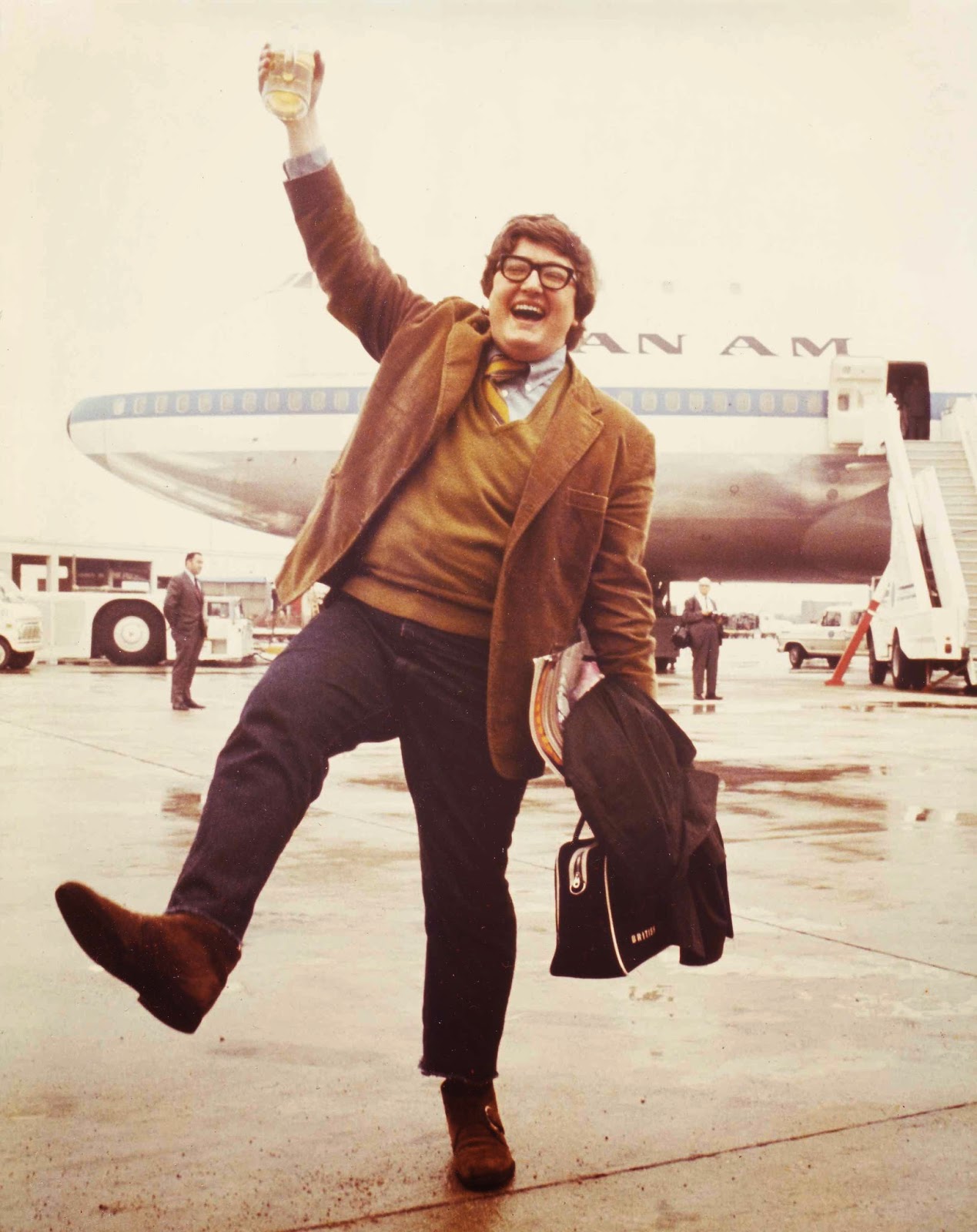
Life Itself: The Life of Roger Ebert


Pulitzer Prize winning film critic Roger Ebert died last year at age 70, but just last week filmmaker Steve James released his new documentary about Ebert's life called Life Itself. The film was executive produced by Martin Scorsese, who is interviewed in the documentary, as well as Chaz Ebert, Marlene Iglitzen Siskel and other friends, producers, writers and directors. It's a meaningful but poignant film, based on the book of the same title. It's well worth seeing and discussing.

In Life Itself, Ebert notes that what he loves about film is it's ability to help us all learn empathy for other people: people in other places and circumstances than ourselves.

Ebert fought for years with his frenemy, Chicago Tribune film critic Gene Siskel. Together they hosted the movie review television shows Sneak Previews and Siskel and Ebert at the Movies. Their egos clashed. They were quite different, they fought for screen time and often bickered endlessly as they taped their shows. Siskel died after surgery from brain cancer in 1999 at age 53, and never told Ebert he was terminally ill or said goodbye.

Ebert's biggest battle was against thyroid and jaw cancer, which required multiple surgeries and left him unable to speak, eat or drink. It was a long journey, and his wife Chaz who he married at age 50 was with him every step of the way. Her family embraced him, despite their differences. (She's black, he was white). They met at AA. They loved each other dearly and she was his advocate and caregiver throughout his illness.

After Ebert won the Pulitzer at the Chicago Sun Times, he received offers to move to newspapers in Washington D.C., Los Angeles and New York. He turned them all down to stay in his hometown. The movie is a kind of love story to Chicago, with some beautiful photography of the city, and snippets about what he loved about his city.

Partially due to what he experienced with the secrecy Gene Siskel's death, Ebert decided to be open and disclose his stuggle with cancer. He still appeared in public even after his disfiguring facial surgery. He was brave and open with his journey. In the movie, he even allowed the director to film him being suctioned by nurses. When they started the movie, Ebert and the director didn't realize that Ebert was in the last few months of his life.

One of the most profound lessons from Ebert's life was the way he adapted to the changes that came with his cancer. He intended to return to television, but when it became impossible he embraced blogging on his website, and blogged until the day before he died. He loved to write. Continuing to write and review films helped keep him alive longer. He realized communicating with the public was still possible. His last blog entry was called, "A Leave of Presence". He was grateful for a great and interesting life.

Director Steve James does a fine, insightful portrait of Ebert, often developed through email exchanges between the film critic and the director about his life, his parents, his career, his foibles. and his personal life. There are a number of important lessons in his life about courage, getting past ego, openness in the face of life threatening illness, adapting to health changes, finding true love late in life, and being loyal to your hometown.

Thumbs up for the brave Roger Ebert, and the film Life Itself. Sometimes it's the things that we don't expect in life, and how we choose to respond to them, that define us.


Tuesday, September 17, 2013

Go For The Brass Ring (Don't Settle)

I like to see people go for it. I hate to see people settle. It doesn't tend to make people happy in either their professional or personal life to do so. I encourage my counseling and coaching clients of all ages not to. There are key moments in each of  our lives where we need a gentle nudge to step up to becoming a better version of ourselves. Less complacent and comfy perhaps, but reaching and stretching out of our comfort zone. Don't give upon what you REALLY, REALLY want.

In our work life, I like people to go to work happy. I often ask my coaching clients how they feel each day when they are driving to work. Are you excited to get started, or do you dread getting there? Do you wish you could drive someplace else? Since most of us are going to be living longer, and working longer than our parents did, we really need to begin to think differently about work. More of us will have portfolio careers, with different chapters of our work life. It's almost never too late to retrain, rethink and regroup for another chapter.

If you aren't that crazy about your work, you are part of the majority. It's normal to not like your work, but why be normal? Many people kind of passively "fall" into something work-wise, rather than choose a goal and go for it. You my start by remembering what you liked to play when you were a child. You may want to get some career testing done to identify your strengths, career preferences, and help you consider what kind of work environment would be the best match for you.

Even Sigmund Freud felt that we all need two things in life: work and love. It's wonderful if you can invest in yourself enough to find work that uses your gifts and strengths. Now, how about going for it in your personal life?

I see too many people settling for mediocre marriages and love relationships. Life is too short. Step it up. Have an honest conversation with your partner about what you could do to be a better partner for them, and vice versa. Marriage is a lot like an empty box you need to fill with good things and experiences, not just unpack it, and be mad the box is empty. Don't settle for a mediocre relationship: instead, be a leader making things better.

When you are considering a life partner, make sure it is someone you find interesting enough to have as a forever dinner date. I think people know on a deep level if they are settling, or if they are with a partner who makes them come fully alive. It's helpful if you have chemistry, because I find it hard to help a couple create later if they never had it.

It's also important to choose a partner who shares your values, that you share some fun, companionate activities, and have similar life goals.Are they somebody who you can trust? Be yourself with? Do they inspire you to be your best? What is your positive influence on encouraging them?

How are you doing as a parent? If your children are school-age or older you can actually check with your child directly and ask them. Find out if you are giving them the support, time, and kinds of attention they need now. You can ask them the best ways to connect with them, and what you may be doing that annoys them. When do they feel closest to you? Never settle for being a mediocre parent when you are capable of doing better.

People settle for all kinds of reasons. Sometimes it's because it's easier and doesn't require leaving the comfort zone.We can be fearful of being alone, risking failure, or looking defeated to others. We may feel pressure directly or indirectly to please others. We may need more information.  Change can be hard or anxiety producing, but change is sometimes a necessary condition for growing. Ignoring boredom or the feeling of settling either at work or in your personal life can actually make you anxious or depressed.

Go for the brass ring in your life. Why would you settle for anything less? You'd be shortchanging yourself and others, and missing out on your own growth from REALLY going for it. Go with courage towards your dreams.

"We are the ones we have been waiting for."
---Hopi Indian Elders' Prophecy

"Be yourself; no base imitator of another, but your best self. There is something which you can do better than another. Listen to the inward voice and bravely obey that. Do the things at which you are great."
----Ralph Waldo Emerson

"Life is an opportunity, benefit from it.
Life is beauty, admire it.
Life is a dream, realize it.
Life is a challenge, meet it.
Life is a duty, complete it.
Life is a game, play it.
Life is a promise, fulfill it."
 -----Mother Teresa