Showing posts with label change. Show all posts

Monday, June 1, 2015

Preparing For The Empty Nest

What happens when you send your only or last child to college? Mom and Dad need to give some thought to their next chapter. You don't want your college student to worry that you won't be okay! You also don't want them to feel frustrated with the neediness of too frequent phone calls so that they are distracted from making a positive adjustment to college. Starting to think about this transition a year or two ahead of launching your only or youngest child is a good idea.

If you've been an involved and caring parent, you want to plan for the sense of loss that can occur when your son or daughter departs for college. I like to remind parents that launching your child successfully into college is the desired outcome of the parenting project. It's just that it's an ending. You may have feelings of sadness, loss, grief, relief, joy and worry. You will also have some free time and emotional energy that you can redistribute to other people and causes.

After the college launch is a good time to develop your sense of self. What are your other interests and passions you haven't had time to pursue? Would you like to take a class or learn something new? Perhaps you'd like to volunteer for a cause you care about. In Orange County, where my counseling practice is, we have a great non-profit organization called OneOC that can help you quickly scan most volunteer needs in our local community.

It can be helpful to picture your life as a grid of about 16 boxes. While you are in the heavy parenting years, your children can fill many of the boxes. As you prepare to launch the youngest, it's time to re-examine your grid. You need many different facets of your life to be fully developing and keep yourself interested and interesting. Here are some boxes to consider for your life grid:

  • Creativity
  • Career
  • Spirituality
  • Self-Care
  • Physical Health
  • Physical Activities
  • Outdoor Time
  • Personal Growth
  • Love Relationship
  • Friendships
  • Community Service
  • Family Relationships
  • Home
  • Finances
  • Intellectual Growth
  • Travel

In each area, you can identify a goal and a small step you can take to move forward. It's best to take on just a couple of grid blocks at a time. This can be a kind of road map for giving your life a well-rounded feel.

For couples, I like to encourage you to think of launching your youngest child as a time for a renaissance for your marriage. Here's a fun exercise you can do with your partner about creating positive experiences together:

Have each partner write a separate list about fun things you liked to do together when you were first together, what you currently enjoy doing together, and what you would enjoy doing together in the future. Next, compare lists. You can negotiate trying some of the future activities that each of you would like. Remember, before your youngest child departs is a great time to intentionally begin  growing closer and having more fun together as a couple.

Entrances (like births, adoptions, marriages and remarriages) and exits (deaths, divorce, separations and transitions to the next phase of life) are challenges for the family system. Being intentional about making the transition to becoming empty nesters another positive chapter in your life helps everyone.

Actively creating this transition will serve you better than ignoring it until you come back from dropping your son or daughter at college. The whole family needs to make some adjustments and grow, adults included. You may find that you grow closer to your child as the space increases between you. It helps to remember that a part of being a good parent at some transition points is letting go with love.

Monday, July 14, 2014

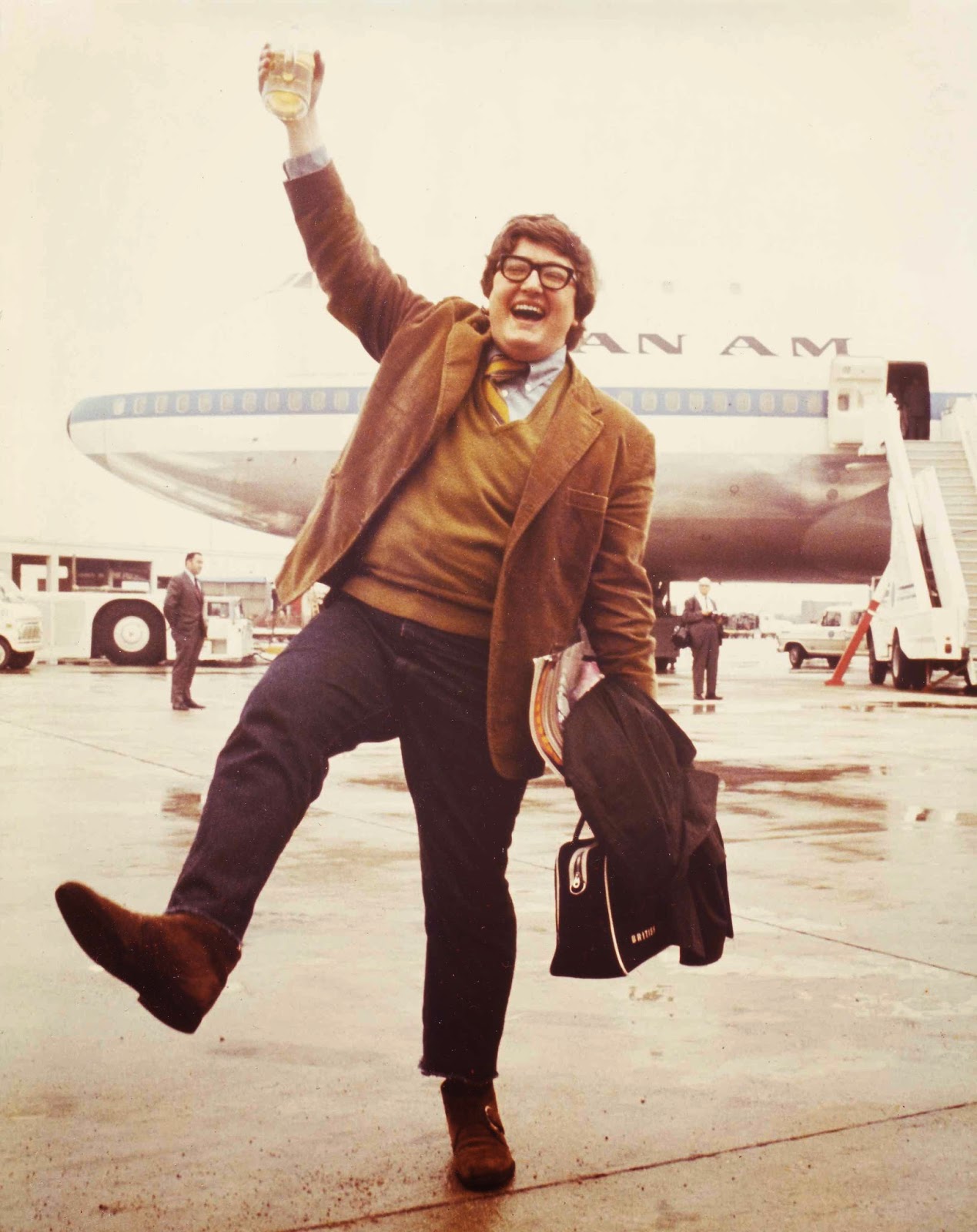
Life Itself: The Life of Roger Ebert


Pulitzer Prize winning film critic Roger Ebert died last year at age 70, but just last week filmmaker Steve James released his new documentary about Ebert's life called Life Itself. The film was executive produced by Martin Scorsese, who is interviewed in the documentary, as well as Chaz Ebert, Marlene Iglitzen Siskel and other friends, producers, writers and directors. It's a meaningful but poignant film, based on the book of the same title. It's well worth seeing and discussing.

In Life Itself, Ebert notes that what he loves about film is it's ability to help us all learn empathy for other people: people in other places and circumstances than ourselves.

Ebert fought for years with his frenemy, Chicago Tribune film critic Gene Siskel. Together they hosted the movie review television shows Sneak Previews and Siskel and Ebert at the Movies. Their egos clashed. They were quite different, they fought for screen time and often bickered endlessly as they taped their shows. Siskel died after surgery from brain cancer in 1999 at age 53, and never told Ebert he was terminally ill or said goodbye.

Ebert's biggest battle was against thyroid and jaw cancer, which required multiple surgeries and left him unable to speak, eat or drink. It was a long journey, and his wife Chaz who he married at age 50 was with him every step of the way. Her family embraced him, despite their differences. (She's black, he was white). They met at AA. They loved each other dearly and she was his advocate and caregiver throughout his illness.

After Ebert won the Pulitzer at the Chicago Sun Times, he received offers to move to newspapers in Washington D.C., Los Angeles and New York. He turned them all down to stay in his hometown. The movie is a kind of love story to Chicago, with some beautiful photography of the city, and snippets about what he loved about his city.

Partially due to what he experienced with the secrecy Gene Siskel's death, Ebert decided to be open and disclose his stuggle with cancer. He still appeared in public even after his disfiguring facial surgery. He was brave and open with his journey. In the movie, he even allowed the director to film him being suctioned by nurses. When they started the movie, Ebert and the director didn't realize that Ebert was in the last few months of his life.

One of the most profound lessons from Ebert's life was the way he adapted to the changes that came with his cancer. He intended to return to television, but when it became impossible he embraced blogging on his website, and blogged until the day before he died. He loved to write. Continuing to write and review films helped keep him alive longer. He realized communicating with the public was still possible. His last blog entry was called, "A Leave of Presence". He was grateful for a great and interesting life.

Director Steve James does a fine, insightful portrait of Ebert, often developed through email exchanges between the film critic and the director about his life, his parents, his career, his foibles. and his personal life. There are a number of important lessons in his life about courage, getting past ego, openness in the face of life threatening illness, adapting to health changes, finding true love late in life, and being loyal to your hometown.

Thumbs up for the brave Roger Ebert, and the film Life Itself. Sometimes it's the things that we don't expect in life, and how we choose to respond to them, that define us.


Monday, June 30, 2014

What is Your Health Legacy?


I spent a weekend in June learning from Daniel Amen, MD, Daniel Siegel, MD, Mark Hyman, MD,  Tana Amen, RN and a variety of other mental health, physical health, wellness and fitness experts at "Brain and Body Turnaround". The conference got me thinking about how much we each need to take responsibility for our health, and the patterns we are modeling for our children and grandchildren.

Dr. Amen is a neurologist and psychiatrist who founded the Amen Clinics, where he is well-known for using brain scans to help identify certain kinds of physical and mental illness, and his studies show the impact of improved health habits on brain functioning. Dr. Siegel is a UCLA child psychiatrist and leading expert and researcher in mindfulness.

We each inherit certain genetic predispositions, but we can take control for doing our best to manage our moods and not trigger health problems. We all have choices about our thinking, the food we eat, having good sleep habits, and whether or not we exercise. I enjoyed the conference because it focused on getting past excuses and making some small changes. Even a few changes, like adding in a daily walk, can have a huge impact on your physical and mental wellness.

Each of us has to decide what health legacy we want to leave behind us. Our life is our message. It is more powerful than whatever you could say to your children.

Do you want younger family members to see you actively engaged in learning new things, practicing mindfulness, forgiving others and yourself, making repairs to tense relationships when you can? I always admire people who continuously seek personal growth and deeper relationships, as opposed to sliding by in quiet desperation or complaints. Taking action to make relationships stronger and more satisfying is a sign of mental wellness. I have had clients into their 80's and beyond who are working hard on making a relationship better, or making a life adjustment successful. I love to see that kind of open-minded aging.

Many mental health concerns, such as anxiety and depression are helped greatly by daily moderate exercise. I routinely ask about how much my clients are exercising, which can help ease both anxiety and depression symptoms.

Working with your own automatic negative thoughts daily and learning to counter them is critically important. Each of us is vulnerable to sometimes using black and white thinking, emotional reasoning, mind-reading, personalization and other thought errors which can make us feel worse if we don't trash them daily. You may want to write them out, counter them and rip them up!

Taking responsibility for what we eat and the exercise we get daily is also an aspect of optimal wellness. Reducing or eliminating sugars, for example can help us avoid weight gain and stabilize mood.

We want to avoid a "victim" mentality about our health and genetic risk factors. We want to think of our doctors as consultants, not our fathers or mothers. It is healthy to ask questions and get second opinions. I noticed years ago when I helped lead an arthritis support group for a local hospital, how much better patients did when they were active in the treatment, educated about options, and physically active and cooperative with dietary changes.

As we age, we need to make a decision if we want to  take responsibility for staying as active, healthy and vital as we can as long as we can. What helps?

1. Exercise daily. Start slowly if you haven't been active, and get your doctor's approval.

2. Limit or eliminate sugars, energy drinks, and soda. Limit alcohol use, too.

3. Eat more fruits and vegetables.

4. Keep your weight in the right range, with a BMI under 25. Overweight is considered a BMI of 25-29.9, while obesity begins at a BMI of 30. Obesity increases risk for Type 2 diabetes, heart disease, some cancers, sleep apnea, stroke, osteoarthritis and other diseases.

5. Drink more water.

6. Consider going organic with your produce to avoid pesticides.

6. Develop good sleep habits. Limit caffeine after noon, set a routine wind down time, sleep time and waking hour. Turn off technology (television, computer, ipad, cell, etc.) an hour before bed as the light is activating for your brain.

7. Keep learning new things.

8. Practice quieting your mind with gardening, needlework, reading, meditation, prayer, silence, listening to music, or guided imagery daily. This will help you manage your moods better.

9. Don't believe every stupid negative thought you have. Sweep them out daily.

10. Stay open to building and developing your friendships and your love relationship to be genuine, mutually supportive and honest. Spend time with people you care about.

11. Help others. Find a way to contribute to the planet at whatever stage of life you are in. Someone needs you, and love makes us real. Find a need and fill it, whether it's in your home, your neighborhood or the larger world.

12. Heal childhood wounds and work through losses. If you are still hurting about things from childhood or an unresolved loss, find a good therapist who can help you work through your feelings
and experiences and let it go. Don't keep carrying your pain around.

Don't carry forward unhealthy lifestyle habits or mental/emotional habits to share with younger people in your family. You can break any pattern or tradition you want, from negative fear-based thinking,  emotional overeating, poor parenting, addiction issues, rigidity, unhealthy relationships or depression/anxiety. It's what you do with what you have that helps you leave a positive legacy of mental and physical health.

Tuesday, December 28, 2010

Getting Inspired For The New Year

2010 wraps up this Friday, and we break open a fresh new year. I found it busy at the gym this morning, so perhaps many of us are thinking about getting back on track, or doing a few things healthier or differently for the start of the new year that unfolds soon. There is also conversation that goes on,internally and with loved ones, about whether to choose a new years' resolution or not.Perhaps this year you would rather get inspired about something rather than make a resolution, and it might be a better way to approach change.

There is kind of a negative connotation to new years' resolutions. As if they have to mean giving up something you like,or setting up an ordeal for yourself, like a crazy workout schedule that it will be hard to follow through on. Resolutions also carry with them a sense of doom, like failure in carrying through on them may be inevitable.Let's consider some positive ways to get inspired for a new year instead.

What could you get inspired about for the new year? You could commit to a month of giving yourself 15 minutes of quiet everyday, and see what bubbles up to the surface about your life. You could challenge yourself to say 'no' more often this year to give your life some more open space. You could get inspired about embracing more fun this year with your partner.It could be comforting to commit to create a home environment that is less cluttered and more relaxed for you to be in.You could try a new activity or plan a trip you always wanted to take. It could be your year to express your love or appreciation more frequently to the people who matter in your life.You could be inspired to listen more and lecture less.

There are an unlimited number of ways to find inspiration. A new year is a blank canvas on which you have the chance to create new patterns and experiences.You don't have to resolve to do something austere and icky. You can add something positive to your life. This is definiely a good year for commiting to being the best partner, parent, and person you can be. Be inspired and share the challenge with a close confidante who can hold you lovingly accountable.

You may also want to visualize saying goodbye and dropping off old emotional baggage at the train station. You could leave certain negative emotional patterns in the old pages of your 2010 calender,like rushing,impatience,grudges,criticizing and judging others,or being stubborn, inflexible or demanding.The most emotionally healthy people can shift perspectives and see things from someone else's perspective. There is power in visualization, so drop off any negative emotions at the station that you need to.

Let's move forward into the brand new year open to experiences and the deepening of authentic relationships with others.Let's take time to do the self-care we each need to do to feel balanced.Let's begin again in an inspired way; lighter,kinder, and with a reverence for life and love that knows intuitively that we are not here forever.Happy New Year! You can make it one of your very best.